


Enhancing School Dance Performances with Scenic Projections and Essential Gear
Scenic Projections are no longer just for musical theatre. Imagine the Nutcracker with snow falling, Swan Lake with water flowing, Scenic projections for dance productions replace or enhance physical sets with dynamic digital imagery, offering immersive, cost-effective, and versatile environments. This post explores how projections can enhance school dance performances, the types of projectors and stage gear needed, and practical tips for successful implementation.
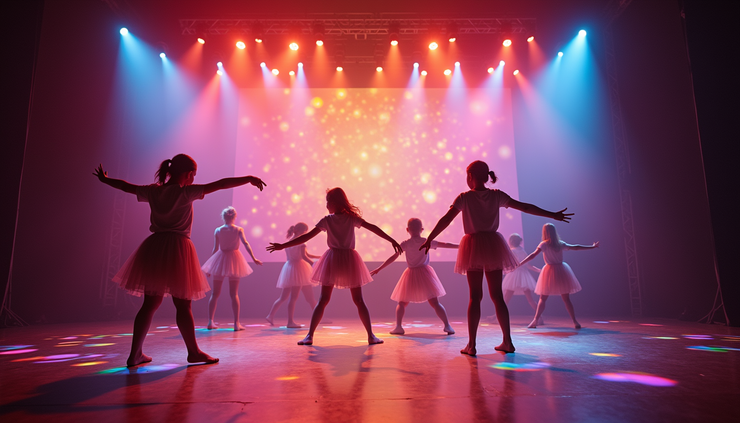
Why Use Scenic Projections in School Dance Performances
Scenic projections add depth and visual interest to dance performances without the need for bulky sets or expensive props. They allow schools to:
Create immersive environments that match the theme or story of the dance.
Change scenes quickly without physical set changes, saving time and effort.
Enhance mood and emotion through colors, patterns, and motion.
Engage audiences with visually striking backgrounds that complement choreography.
For example, a dance about magical worlds can be enhanced with projections of enchanted forest. A glamorous performance might project a Hollywood background.
Choosing the Right Projectors for School Settings
Selecting the right projector is crucial for achieving clear, bright, and vibrant projections. Schools often face budget constraints and limited technical support, so it’s important to balance quality with affordability and ease of use. (SLShowTech rental options)
Key Features to Look For
Brightness (Lumens): For school auditoriums or gymnasiums with ambient light, projectors with at least 5000 lumens are recommended. Higher brightness ensures images remain visible even with stage lighting.
Resolution: A minimum of 1080p (Full HD) resolution provides sharp and detailed images. Higher resolutions like 4K are ideal but may be costly.
Throw Distance: Consider the size of the stage and where the projector can be placed. Short-throw or ultra-short-throw projectors can project large images from a short distance, useful in small spaces.
Connectivity: HDMI and USB ports are standard. Wireless options can simplify setup but may introduce lag.
Portability: Lightweight and compact projectors are easier to move and store in school environments.
Recommended Projector Types
DLP Projectors: Known for good color accuracy and contrast, suitable for vibrant scenic projections.
LCD Projectors: Often more affordable and provide bright images, though sometimes less contrasty.
Laser Projectors: Offer long lamp life and consistent brightness but tend to be more expensive.
Essential Stage Gear for Projection-Based Performances
To maximize the impact of scenic projections, schools need some additional gear beyond the projector itself.
Projection Surfaces
Projection Screens: Portable or fixed screens with matte white surfaces provide the best image quality.
Backdrops: White or light-colored fabric backdrops can serve as projection surfaces. Stretch fabrics or muslin are common choices.
Floors: Special projection floor surfaces or white dance floors allow projections to extend under dancers’ feet.'
Lighting and Control
Stage Lighting: Coordinating stage lights with projections is essential to avoid washing out images. Use dimmable LED lights and gels to balance brightness.
Media Servers or Playback Devices: Devices like laptops or media servers run projection content. Software such as QLab or Resolume can control timing and effects.
Cables and Adapters: Reliable HDMI cables, extension cords, and power strips ensure smooth connections.
Practical Tips for Using Projections in School Dance Productions
Plan Early and Collaborate
Start planning projections during choreography development. Collaborate with dance instructors, lighting technicians, and students to design visuals that enhance the story and movement.
Consider renting projectors if purchasing is not feasible.


